Deck Footing Installation Guide: Depth, Size & Concrete
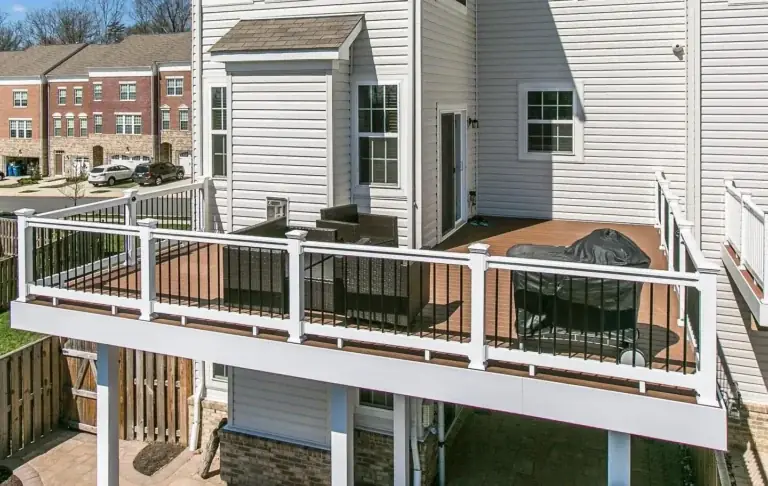
Following a precise deck footing installation guide before mixing your first bag of concrete keeps your entire outdoor structure from sinking into soft spring soil or heaving upward during a January freeze. Three winters ago, I helped jack up and re-pour four corner piers on a 12-by-16-foot composite deck in Minnesota where the previous builder had set 6×6 posts on 14-inch-deep concrete blocks, causing the outer beam to lift two inches every winter and wrench the ledger bolts right out of the house rim joist.
Every elevated or attached residential deck transfers thousands of pounds of dead weight, snow load, and foot traffic straight down through its vertical posts into the earth below. Getting your frost-line depth, bell-bottom pier diameter, concrete PSI rating, and galvanized standoff post anchors right on day one prevents costly foundation failures for decades.
Deck Footing Installation Guide Overview
Key facts to know first
Realistic concrete footing material and excavation costs in 2026
For a standard 12-by-16-foot deck supported by four to six concrete piers, DIY materials (80-pound bags of 3,000+ PSI concrete mix, 10-to-12-inch cardboard sonotube forms, gravel drainage base, and hot-dipped galvanized standoff post bases) cost $350 to $650 total. Hiring a local excavation or deck framing crew to auger holes, pour concrete, and set anchors runs $150 to $300 per footing depending on soil rockiness and frost depth.
Frost-line depth and pier diameter sizing rules
Building codes require concrete deck footings to extend at least 6 inches below your regional frost line so freezing ground water cannot push the pier upward. While southern states like Florida or Texas often require 12 to 18 inches into undisturbed soil, northern states like Michigan, Wisconsin, and Maine mandate 36-to-48-inch footing depths with 10-to-16-inch diameter piers based on soil bearing capacity.
Prepping adjacent exterior masonry and foundation walls before digging
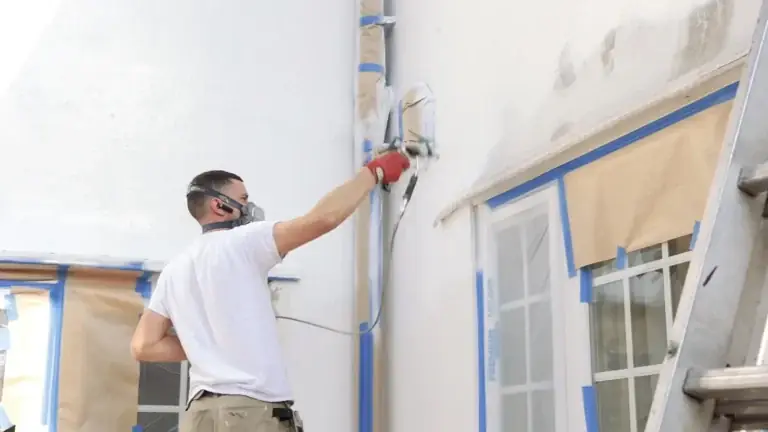
Once concrete piers are poured and low-profile framing goes up near your house, reaching the lower brick foundation or siding behind the deck becomes nearly impossible. If your foundation wall needs coating first, follow proven exterior masonry painting tips, and check local forecasts carefully for exterior painting when it rains or exterior painting when humid before sealing adjacent wood trim.
What most people get wrong
Resting wooden posts on surface patio blocks or shallow holes
Setting 6×6 posts on precast surface concrete pyramid blocks works only for tiny, detached ground-level platforms under 30 inches high, never for ledger-attached decks. According to the American Wood Council (AWC) DCA 6 Prescriptive Residential Wood Deck Construction Guide, all load-bearing deck footings must rest on undisturbed soil below local frost depth and use rated post-to-footing connectors that resist both gravity and wind uplift.
Embedding untreated or ground-contact wood posts directly inside wet concrete
Burying the bottom of a 6×6 wood post directly inside wet concrete traps rainwater around the wood grain at ground level, causing severe fungal rot within eight to twelve years. Always pour concrete slightly above grade (1 to 2 inches high) and anchor a hot-dipped galvanized standoff post base (such as Simpson ABU66) onto the cured pier so the wood post stays elevated above standing water.
Step-by-step deck footing installation guide workflow for DIYers
Follow these five sequential steps to lay out, excavate, pour, and anchor rock-solid deck piers that pass municipal inspection on the first visit.
-
Call 811 and lay out square batter boards: Contact 811 at least three business days before digging to mark buried gas, electric, and fiber lines, then stretch mason strings over wooden batter boards and verify 90-degree corners using a 3-4-5 triangle measurement.
-
Excavate below frost depth onto undisturbed soil: Rent a two-person gas auger or hydraulic skid-steer auger to bore holes 6 inches deeper than your local frost line, clearing all loose dirt from the bottom and adding 3 to 4 inches of compacted crushed gravel if required by local code.
-
Schedule your open-hole municipal footing inspection: Leave every dug hole open and dry (with cardboard sonotube forms standing nearby) so your city building inspector can verify hole depth, diameter, and solid bottom soil before you mix any concrete.
-
Pour 3,000+ PSI concrete and set J-bolts or post anchors: Mix concrete thoroughly with clean water (avoid soupy mixes that weaken cured strength), fill the sonotube forms while rodding out air pockets, and crown the top slightly above soil grade so rainwater drains away from the center.
-
Allow 48 hours of cure time before loading beams and joists: Let freshly poured concrete cure for at least 48 hours before bolting down 6×6 posts and lifting heavy double 2×12 drop beams onto the piers.
Comparing poured concrete piers versus helical screw piles
Traditional poured concrete piers cost $60 to $110 per hole in DIY materials and work well in clay or loam soils, though digging through tree roots and hauling 40 bags of concrete takes heavy physical labor. Helical steel screw piles installed by certified contractors cost $250 to $450 per pile, drive below frost depth in 15 minutes with zero soil mess, and support full framing loads the exact same afternoon.
Calculating concrete bag counts accurately before visiting the lumberyard
Running two bags short halfway through a concrete pour creates a weak cold joint inside your pier. A standard 12-inch-diameter sonotube poured 42 inches deep holds roughly 2.75 cubic feet of concrete, requiring five 80-pound bags (each 80-pound bag yields 0.60 cubic feet) plus one extra contingency bag per hole for flared bottoms.
Frequently Asked Questions
How deep do footings need to be in a deck footing installation guide?
In any deck footing installation guide, concrete footings must extend at least 6 inches below your local regional frost line into undisturbed soil. Frost depths range from 12 to 18 inches in warm southern states up to 36 to 48 inches in northern states like Minnesota, Michigan, and New York.
What diameter should concrete deck footings be?
Most residential decks require 10-inch to 16-inch diameter concrete piers, depending on your beam span, tributary load area, and local soil bearing capacity (typically 1,500 to 2,000 PSF). Check your local municipal deck span table or the AWC DCA 6 chart to match exact footing diameter to your post spacing.
How many 80-pound bags of concrete do I need per deck footing?
Each 80-pound bag of premixed concrete yields 0.60 cubic feet of cured concrete. For a 12-inch-diameter pier poured 36 inches deep (2.36 cubic feet), plan on four 80-pound bags per hole, or five bags if pouring 42 to 48 inches deep with a wider bottom footing pad.
Can I pour deck footings in cold weather below freezing?
Avoid pouring standard concrete when nighttime temperatures drop below 32°F unless you tent and heat the piers, because freezing water expands inside uncured concrete and permanently ruins its compressive strength. If late-autumn temperatures hover near freezing, use insulated concrete curing blankets for the first 72 hours after pouring.
Ready to Pour Rock-Solid Footings for Your Deck?
Following a dependable deck footing installation guide comes down to calling 811 first, digging at least 6 inches below your local frost line, passing your open-hole inspection, and elevating 6×6 posts on galvanized standoff bases. Measure your post layout this weekend, verify your city’s exact frost depth and diameter chart, and calculate your 80-pound concrete bag count with an extra 15% buffer before breaking ground.