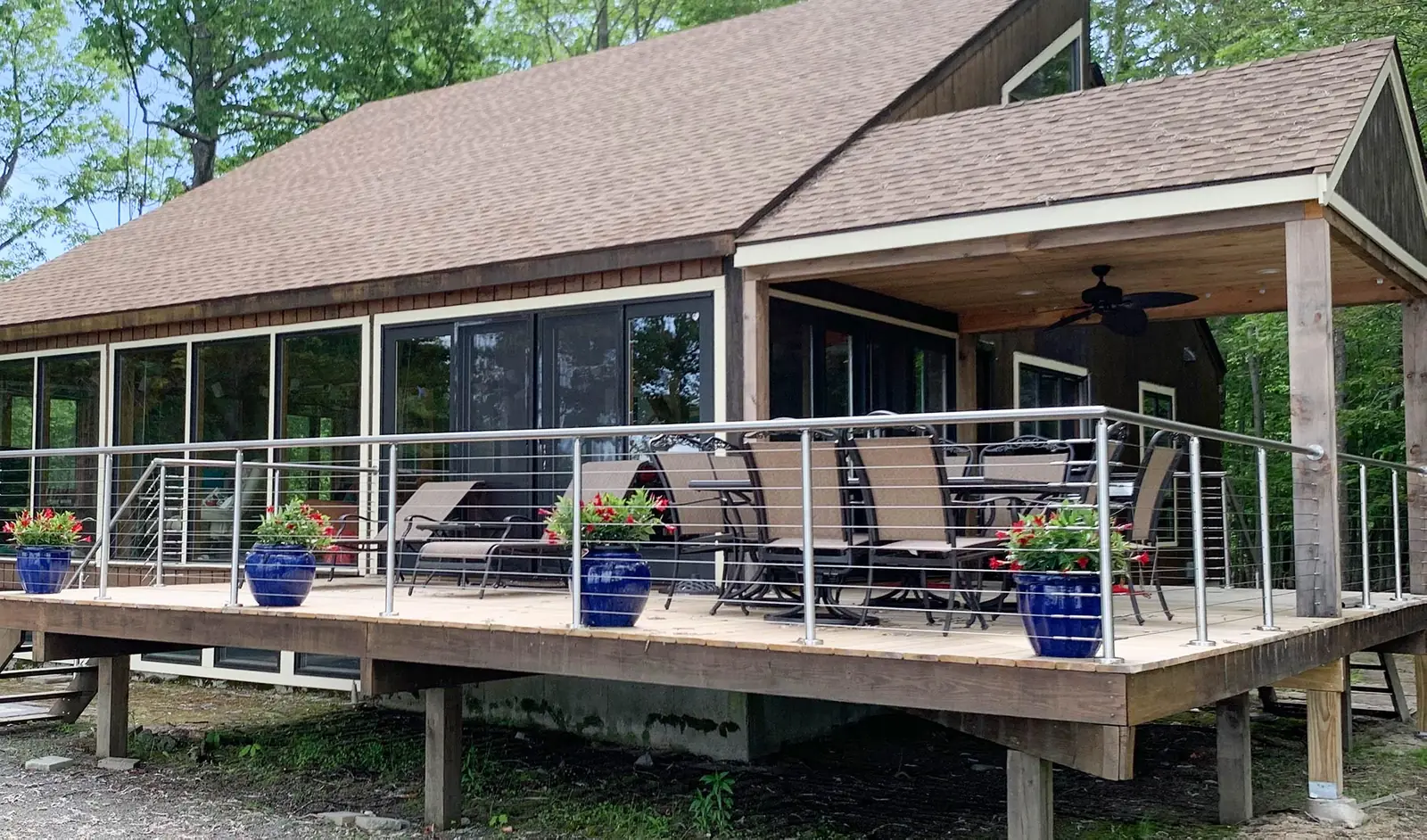
Deck Railing Building Guide: Code Height, Posts & Costs
Following a clear deck railing building guide before anchoring a single 4×4 post keeps your outdoor platform from failing a municipal safety inspection or wobbling when guests lean against the top rail. Two summers ago, I replaced a shaky cedar railing on a second-story deck in Michigan where the original installer had notched the bottom of every 4×4 post by two inches and fastened them with standard deck screws, leaving less than half the post thickness to resist sideways push loads.
Under residential building codes, a deck guardrail must withstand 200 pounds of concentrated lateral force in any direction at the top rail without flexing loose. Understanding exact guardrail height rules, through-bolted post blocking, baluster gap limits, and material pricing gives you a solid, code-compliant perimeter built to last decades.
Deck Railing Building Guide Overview
Key facts to know first
Realistic wood, composite, and aluminum railing costs in 2026
For a standard 12-by-16-foot deck with 40 linear feet of perimeter railing, DIY pressure-treated #1 Southern Yellow Pine railing materials cost $600 to $1,100 ($15 to $28 per linear foot) including 4×4 posts, balusters, and structural hardware. Stepping up to capped composite railing kits (like Trex Transcend) or powder-coated aluminum railings runs $1,600 to $3,200 ($40 to $80 per linear foot) for materials, while professional installation adds $25 to $45 per linear foot.
Mandatory guardrail height, baluster spacing, and load codes
Under the International Residential Code (IRC), any deck standing more than 30 inches above grade requires a guardrail at least 36 inches high, though several states (including California and Washington) enforce a 42-inch minimum height. Balusters must be spaced so a 4-inch sphere cannot pass through anywhere, and the bottom rail sweep gap above the deck boards must stay under 4 inches.
Sealing adjacent exterior masonry and trim before mounting end posts
Once end guardrail posts are bolted tight against house siding or brick walls, painting behind the post face becomes nearly impossible. If your adjacent wall needs coating first, follow proven exterior masonry painting tips, and check local forecasts carefully for exterior painting when it rains or exterior painting when humid before sealing exterior wood trim.
What most people get wrong
Notching the bottom of 4×4 guardrail posts over the rim joist
Cutting a 1-1/2-inch notch out of a 3-1/2-inch thick 4×4 post removes more than 40% of its cross-section right at the highest stress point, causing the post to snap cleanly at the notch if someone leans hard against the rail. According to the American Wood Council (AWC) DCA 6 Prescriptive Residential Wood Deck Construction Guide, builders must never notch 4×4 guardrail posts and must instead reinforce un-notched posts inside the rim joist using internal blocking and structural hold-down tension ties.
Relying on lag screws instead of through-bolts and internal joist blocking
Driving two lag screws into a single 2×10 rim joist will not pass the 200-pound lateral load test because the rim board twists outward under leverage. Every guardrail post needs solid 2×10 blocking installed between adjacent joists, paired with two 1/2-inch hot-dipped galvanized through-bolts (with washers and nuts) or rated structural tension ties (such as Simpson DTT2Z).
Step-by-step deck railing building guide workflow for homeowners
Follow this exact installation sequence so every post stands plumb, meets municipal load rules, and aligns cleanly across corners and stairs.
-
Lay out post spacing at 6 feet on center maximum: Mark post locations no more than 6 feet apart along the perimeter (tighter spacing prevents top rails from sagging), keeping corner posts paired cleanly at 90-degree turns.
-
Install internal 2×10 framing blocking at every post location: Cut solid pressure-treated 2×10 blocks between the rim joist and the first interior joist (plus perpendicular tie-in blocks) so each post locks into a rigid framing box.
-
Mount un-notched 4×4 posts with through-bolts or hold-down anchors: Plumb each 4×4 post using a 4-foot level, clamp it firmly inside the rim joist, and secure it with staggered 1/2-inch galvanized through-bolts or Simpson DTT2Z tension ties before laying perimeter deck boards.
-
Cut and fasten bottom and top rails with a continuous cap board: Set the bottom rail 2 to 3-1/2 inches above the decking surface, fasten balusters at 3-1/2 to 3-3/4 inches edge-to-edge spacing, and crown the assembly with a flat 2×6 drink-rail cap board that sheds rainwater off the post tops.
-
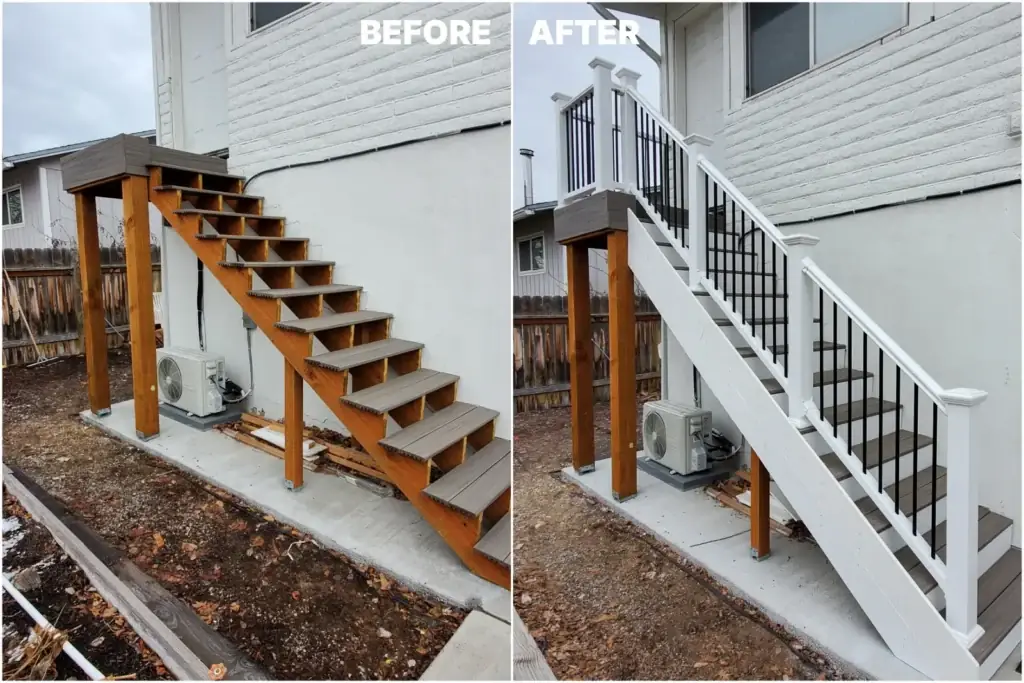
Install graspable stair handrails on flights with four or more risers: Mount a continuous 1-1/4-to-2-inch round or profiled handrail 34 to 38 inches above the stair tread nosings, returning the ends neatly into the newel posts so clothing cannot snag.
Choosing between wood balusters, black aluminum spindles, and cable infill
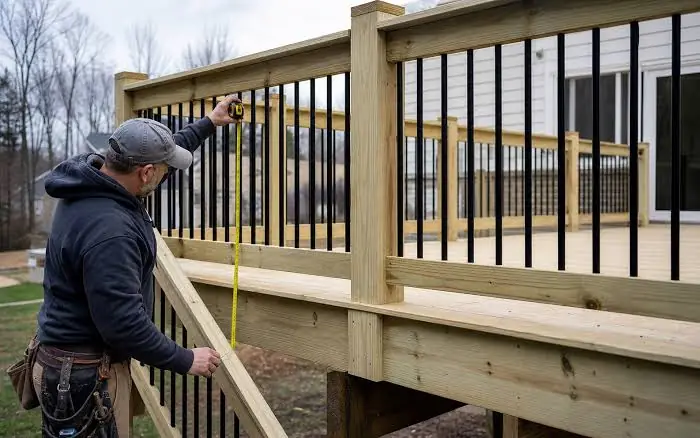
Traditional 2×2 pressure-treated wood balusters cost under $2 each yet block backyard views and require frequent staining. Upgrading to 3/4-inch black powder-coated aluminum round balusters ($2.50 to $4 per spindle) pairs easily with wood rails, eliminates spindle warping, and opens sightlines across your yard.
Protecting wood post tops and cut ends from water rot
End-grain wood exposed at the top of 4×4 posts absorbs rainwater like a sponge, leading to splitting and core decay within five years. Brush copper naphthenate end-cut preservative onto every trimmed post top and cover each post with a copper, cedar, or aluminum post cap (or run a continuous 2×6 top cap rail over all posts).
Frequently Asked Questions
What is the required height in a deck railing building guide?
Under the International Residential Code (IRC) and any standard deck railing building guide, decks sitting more than 30 inches above grade require a guardrail at least 36 inches high, while states like California and Washington require 42-inch guardrails. Check your local city building office before cutting posts to confirm which height applies in your area.
How far apart should deck railing posts be spaced?
Space 4×4 wood guardrail posts no more than 6 feet on center along straight runs, and keep composite or aluminum railing spans within the manufacturer’s tested limits (usually 6 to 8 feet maximum). Closer 6-foot post spacing keeps top rails rigid and prevents mid-span bowing.
What is the maximum gap allowed between deck balusters?
Building codes enforce the 4-inch sphere rule, meaning a 4-inch diameter ball cannot pass through any opening between balusters or beneath the bottom rail. Spacing balusters roughly 3-1/2 to 3-3/4 inches apart keeps gaps safely under the 4-inch limit even if wood spindles shrink slightly as they dry.
Can you mount deck railing posts on top of the deck boards?
Surface-mounted aluminum or steel posts can bolt through the deck boards directly into solid 2×10 blocking underneath if they carry an ICC-ES structural evaluation report. Standard 4×4 wood posts, however, should never be toe-screwed on top of floorboards; they must extend below the deck surface and bolt directly into blocked framing joists.
Ready to Build a Safe, Code-Compliant Deck Railing?
Following a proven deck railing building guide comes down to avoiding post notches, reinforcing every 4×4 post with internal 2×10 blocking and through-bolts, and spacing balusters cleanly under 4 inches apart. Measure your deck perimeter this weekend, check whether your municipality requires 36-inch or 42-inch guardrails, and order hot-dipped galvanized bolts and rated structural connectors before cutting your posts.