Pressure Washer Soap Alternatives: Safe DIY & Eco Cleaners
Running out of commercial detergent halfway through washing your siding does not mean stopping work, and using pressure washer soap alternatives often cleans algae and grease better for a fraction of the $25-per-gallon hardware store markup. Two springs ago, I tested four low-cost detergent substitutes on a mildew-streaked north-facing vinyl wall and an oil-spotted concrete apron, and a $6 batch of diluted sodium hypochlorite paired with a splash of biodegradable surfactant stripped green algae faster than two name-brand concentrate jugs.
Still, pouring the wrong household liquid into a downstream injector or onboard soap tank can ruin your pump seals, kill flower beds, or leave chalky streaks across painted trim. Knowing which chemical bases work safely on vinyl, wood, and concrete keeps your machine running smoothly while cutting supply costs down to pennies per square foot.
Pressure Washer Soap Alternatives Overview
Key facts to know first
Realistic costs per gallon compared to commercial concentrates
Pre-mixed store-bought pressure washer concentrates run $15 to $28 per gallon and usually yield only 10 to 20 gallons of ready-to-spray wash. Bulk sodium percarbonate (oxygen bleach) powder costs roughly $2.50 to $4 per pound, while basic sodium hypochlorite and biodegradable surfactant mixes cost under $1.20 per ready-to-spray gallon.
How surfactants and oxidizers work differently on exterior grime
Plain soaps and surfactants lower water surface tension so oily road film and pollen lift away, yet they do not kill living mold or Gloeocapsa magma algae spores. Oxidizers like oxygen bleach or properly diluted sodium hypochlorite break down organic growth at the cellular level, meaning your siding stays clean for 18 to 24 months instead of turning green again by autumn.
Prepping exterior walls before repainting or re-siding
Using the right wash chemistry is mandatory before spending thousands on fresh paint or replacement cladding. Homeowners reading a walpamur exterior paint review or comparing long-term alternatives to painting house exteriors quickly learn that new coatings blister and peel within two seasons if chalking oxidation and mildew roots are not neutralized first.
What most people get wrong
Pouring dish soap, laundry detergent, or vinegar straight into pump tanks
Standard kitchen dish soaps create heavy suds that trap air in downstream injectors, leave sticky films that attract dust, and often contain thickeners that gum up check valves. Worse, pouring acidic white vinegar through a pressure washer corrodes brass pump manifolds and rubber O-rings, and mixing vinegar with bleach creates toxic chlorine gas.
Overlooking runoff safety near storm drains and landscaping
Even biodegradable cleaners can harm backyard shrubs or local creeks if concentrated runoff washes directly into street gutters. According to the U.S. Environmental Protection Agency (EPA), wash water containing detergents, grease, or chemicals should be directed onto vegetated soil or gravel rather than storm drains, and surrounding plants should be pre-wetted with fresh water before spraying.
Best pressure washer soap alternatives by exterior surface
Match your cleaning agent to the exact material on your walls, deck, or driveway so you lift stains without etching finishes or voiding pump warranties.
-
Sodium percarbonate / oxygen bleach (for cedar decks, fences, and plant-heavy yards): Dissolves in warm water to release oxygen bubbles that lift gray wood fibers and light mildew, breaking down into harmless water, oxygen, and soda ash.
-
Diluted sodium hypochlorite with biodegradable surfactant (for vinyl siding, stucco, and roofs): Mixes a 1% to 1.5% active solution with a dash of bleach-stable surfactant to kill black roof streaks and green siding algae without high-PSI wand damage.
-
Washing soda / sodium carbonate solution (for concrete driveways and oil spots): Cuts through motor oil, grease, and embedded tire marks on porous concrete when applied with a pump sprayer and scrubbed before rinsing.
-
Castile soap and warm water (for painted trim, patio furniture, and vehicles): Provides a gentle, plant-derived surfactant rinse that lifts pollen and cobwebs without stripping wax or dulling semi-gloss paint.
-
Oxalic acid wood brightener (for orange irrigation rust and tannin stains): Neutralizes alkaline wash residues on redwood and cedar decks and dissolves iron rust stains on concrete walkways without harsh scrubbing.
Downstream injectors versus standalone pump sprayers
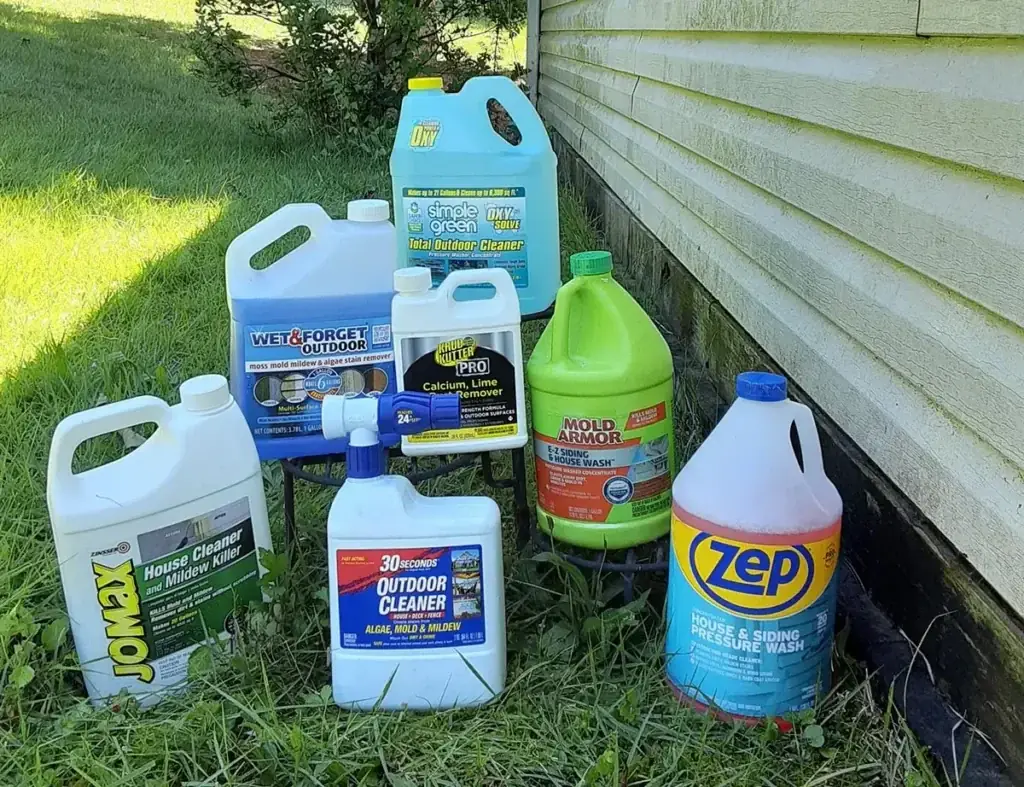
Never run bleach, acids, or gritty powders through your machine’s built-in onboard detergent tank, because those chemicals pass directly through the pump head and eat away brass fittings. Apply active oxidizers and degreasers using a $25 2-gallon garden pump sprayer or a brass downstream injector mounted after the pump outlet, then flush the injector with plain water for 60 seconds when finished.
Knowing when to skip DIY mixes and hire a local soft-wash crew
Mixing your own oxygen bleach or castile soap works great for ground-level patios, fences, and single-story siding, yet two-story eaves and steep shingle roofs carry real ladder and chemical-burn hazards. Before hiring out multi-story house or roof washing, check verified customer feedback like rj pressure washing reviews to confirm the crew uses dedicated soft-wash pumps, pre-soaks flower beds, and carries full liability insurance.
Frequently Asked Questions
What are the safest pressure washer soap alternatives for vinyl siding and plants?
Sodium percarbonate (oxygen bleach) mixed with warm water and a small amount of biodegradable liquid castile soap is one of the safest pressure washer soap alternatives near flower beds. It lifts green algae and grime without toxic chlorine fumes, and it breaks down into water, oxygen, and soda ash after rinsing.
Can I put Dawn dish soap in my pressure washer detergent tank?
No, you should avoid running standard dish soap through your pressure washer’s internal soap tank because heavy foaming can cause pump cavitation and leave a hazy film on windows and siding. If you use a tiny drop of dish detergent as a wetting agent in a manual pump sprayer, stick to plain, bleach-safe surfactant instead.
Is vinegar safe to use as a pressure washer detergent?
No, white vinegar is acidic enough to corrode brass fittings, stainless steel valves, and rubber O-rings inside your pressure washer pump. Mixing vinegar with any bleach-based house wash also triggers a dangerous chemical reaction that releases toxic chlorine gas.
How long should homemade pressure washer solutions sit before rinsing?
Let oxygen bleach or diluted house-wash mixes dwell on the surface for 10 to 15 minutes so the solution breaks down organic algae and dirt. Keep the surface damp and rinse thoroughly with a wide 40-degree fan tip before the cleaner dries in direct sunlight.
Ready to Mix a Safer, Cheaper Exterior Wash?
Choosing the right pressure washer soap alternatives keeps caustic chemicals out of your pump head while saving you up to 70% compared to pre-mixed hardware store jugs. Check the material you need to clean this weekend, pick up a 2-gallon pump sprayer along with oxygen bleach for wood decks or a bleach-stable surfactant for vinyl siding, and pre-wet your landscaping before starting your first test patch.