Pressure Washing Options: Best Methods & Real Home Costs
Choosing the right pressure washing options for your property comes down to one rule: match the water pressure and cleaning chemistry to the surface material, never the dirt level. Two springs ago, I watched a neighbor spend $280 on a high-PSI weekend rental and accidentally gouge tiger stripes into his cedar deck boards while failing to remove the black algae streaks on his north-facing vinyl siding.
Different exterior surfaces react completely differently to water force and heat. Understanding how low-pressure soft washing, cold-water rotary surface cleaning, and hot-water degreasing work lets you clean every inch of your property safely without paying for avoidable siding or shingle repairs.
Pressure Washing Options Overview
Key facts to know first
Realistic costs across professional and DIY methods
Hiring a pro for low-pressure house washing typically runs $175 to $450 for a single-story home and $300 to $600 for a two-story exterior ($0.20 to $0.35 per square foot), while concrete driveway cleaning lands between $100 and $300. If you prefer DIY, renting a commercial 3,000 PSI cold-water unit with a rotary surface attachment costs $75 to $110 per day, whereas buying an electric 1,800 PSI homeowner unit runs $150 to $300.
Low-pressure soft washing versus high-PSI mechanical blasting
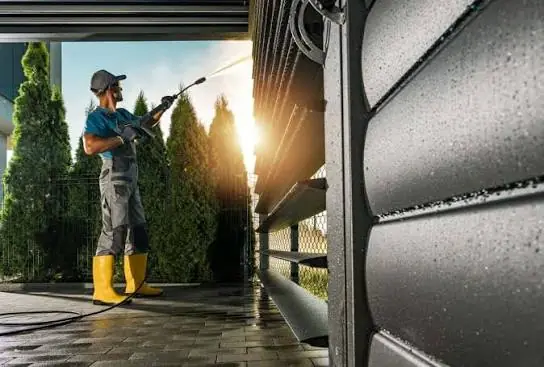
Soft washing delivers biodegradable surfactants and sodium hypochlorite at 60 to 100 PSI (about garden-hose pressure) to kill mold, mildew, and Gloeocapsa magma algae spores at the root. High-pressure washing pushes 2,500 to 4,000 PSI of mechanical water force to lift embedded clay, mud, and grime out of porous concrete and stone.
Prepping exterior walls before repainting or re-siding
Selecting the right wash method is mandatory before spending thousands on fresh paint or replacement cladding. Homeowners reading a walpamur exterior paint review or weighing long-term alternatives to painting house exteriors quickly learn that new coatings blister and peel within two seasons if chalking oxidation and mildew roots are not neutralized first.
What most people get wrong
Assuming dirtier siding needs higher water pressure
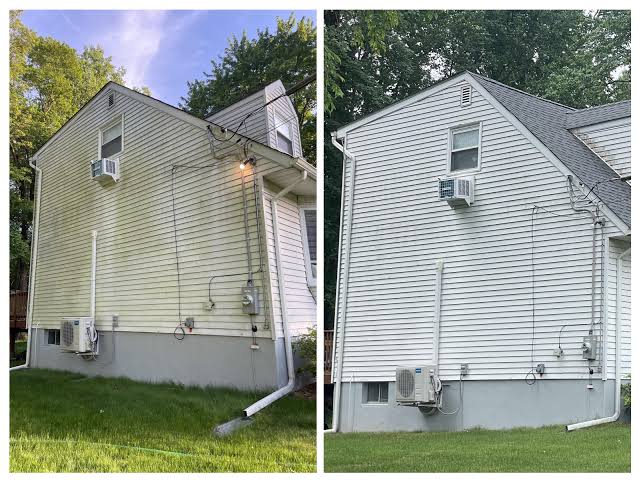
Cranking up the PSI on vinyl lap siding, painted wood clapboards, or stucco strips protective coatings and forces water behind trim joints into your wall sheathing. According to the Power Washers of North America (PWNA), safe residential house washing relies on low-pressure detergent application and gentle rinsing rather than brute water force.
Using a narrow wand tip on concrete driveways instead of a surface cleaner
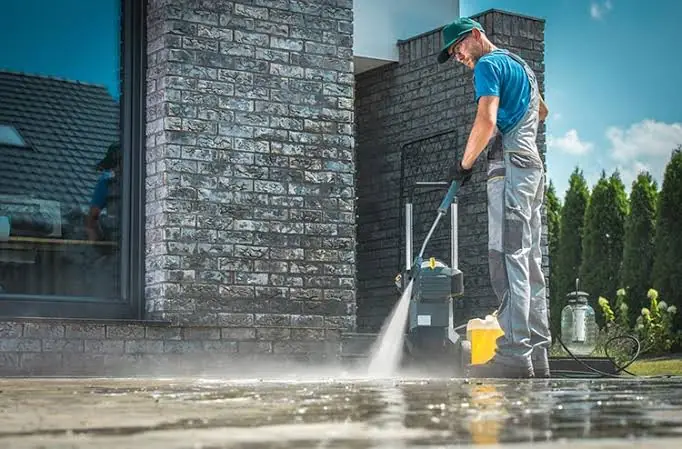
Sweeping a 15-degree wand back and forth across a concrete driveway almost always leaves permanent overlapping wand marks and takes three times longer than necessary. Attaching a round rotary surface cleaner with dual spinning nozzles keeps the spray bar at a fixed height, delivering an even, streak-free clean in half the time.
Comparing pressure washing options by exterior surface
Match your cleaning method to each material around your yard so you strip away organic growth without damaging finishes.
-
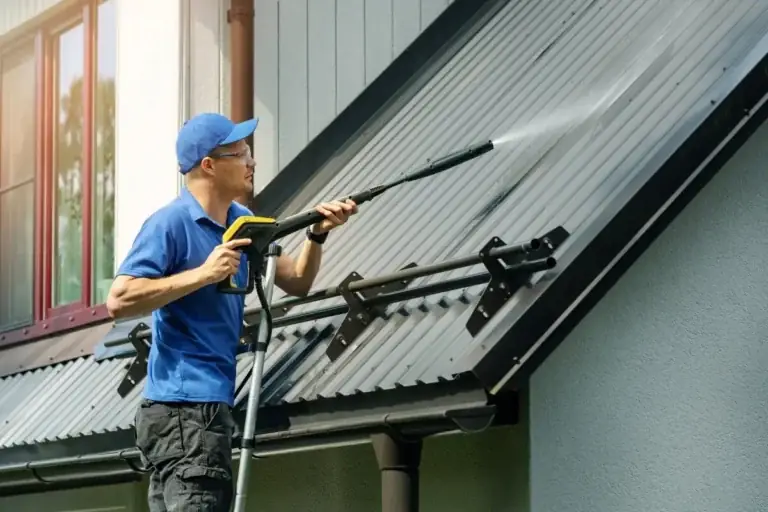
Low-pressure soft washing (for vinyl, stucco, painted wood, and roofs): Uses 60 to 100 PSI and targeted algaecides to kill black roof streaks and green siding mildew without lifting shingles or peeling paint.
-
Cold-water high-PSI rotary cleaning (for concrete driveways and sidewalks): Combines 2,500 to 3,500 PSI with a spinning hover-style surface cleaner to lift embedded dirt and algae from bare concrete.
-
Hot-water pressure washing (for oil-stained garage aprons and heavy grease): Heats water up to 200°F alongside alkaline degreasers to break down motor oil, rust stains, and chewing gum on commercial or residential flatwork.
-
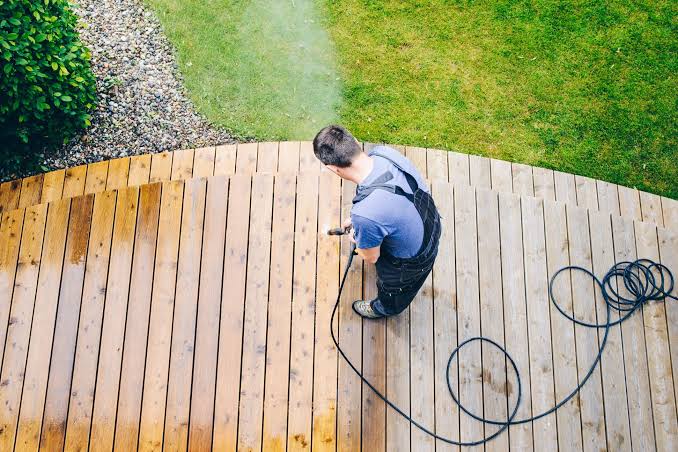
Medium-pressure fan wash with wood brightener (for cedar decks and fences): Uses 500 to 800 PSI with a wide 40-degree white tip and sodium percarbonate cleaner to lift gray weathered fibers without splintering soft wood.
-
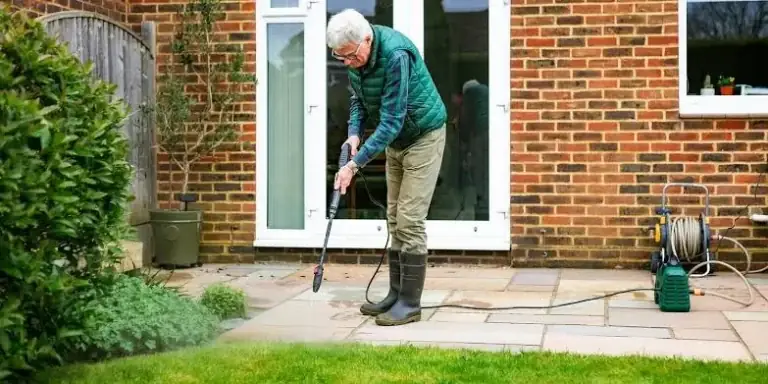
Low-pressure brick and paver wash (for interlocking patios): Uses gentle fan nozzles and specialized efflorescence cleaners so high-pressure jets do not blast polymeric joint sand out from between the pavers.
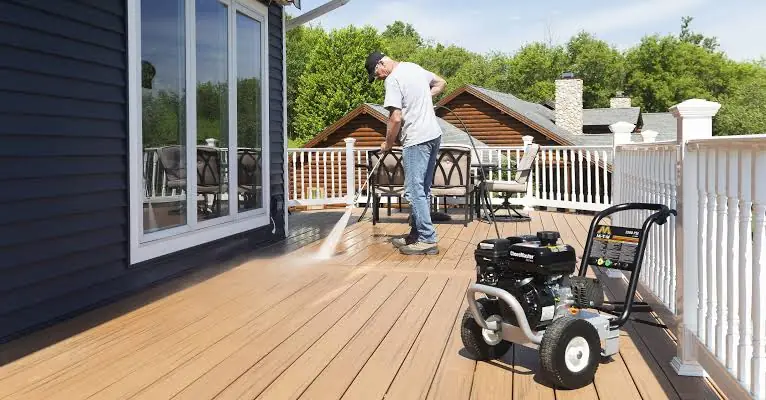
Electric homeowner machines versus gas-powered commercial units
Electric pressure washers (1,600 to 2,100 PSI at 1.2 to 1.8 GPM) are quiet, lightweight, and ideal for washing patio furniture, composite decks, and cars. Gas-powered units (2,800 to 4,000 PSI at 2.5 to 4.0 GPM) deliver the higher gallons-per-minute water flow needed to power rotary concrete surface cleaners and rinse two-story walls quickly.
Deciding when to DIY versus hiring a certified soft-wash crew
Renting a machine works well for a single-story patio or concrete walkway, yet multi-story house washing and steep roof cleaning carry serious ladder and chemical-burn risks. Before booking a local contractor, check verified customer feedback like rj pressure washing reviews to confirm the crew pre-wets surrounding shrubs, carries commercial liability insurance, and backs their work with a written no-damage guarantee.
Frequently Asked Questions
Which pressure washing options are safest for vinyl siding and roofs?
Low-pressure chemical soft washing (60 to 100 PSI) is the safest option for vinyl siding, painted trim, stucco, and asphalt shingle roofs. It kills mold and algae spores at the root without forcing water behind siding panels or stripping protective shingle granules.
Can I rent a pressure washer to clean my own concrete driveway?
Yes, renting a 3,000 PSI gas pressure washer paired with a rotary surface cleaner attachment costs roughly $75 to $110 per day and cleans a standard two-car driveway in about two hours. Avoid using a narrow zero-degree or 15-degree wand tip directly on concrete, as it can etch permanent lines into the surface.
How often should I wash my house exterior and driveway?
Most homes benefit from a soft house wash every 12 to 18 months and concrete driveway cleaning once a year. Shaded, north-facing walls surrounded by dense trees or high humidity may require an annual maintenance wash to keep green algae from taking hold.
Does hot-water pressure washing work better than cold water?
Hot-water pressure washing works significantly better for dissolving motor oil stains, automotive grease, and sticky sap on concrete driveways. For general house siding, decks, and organic algae removal, cold-water soft washing with the proper surfactant mix works just as well at a much lower cost.
Ready to Pick the Right Cleaning Method?
Choosing the best pressure washing options comes down to separating delicate walls and roofs (which need low-pressure soft washing) from tough concrete flatwork (which handles high-PSI rotary surface cleaners). Walk around your property today to list each surface you want cleaned, pick up a hose-end soft-wash sprayer for simple ground-level siding or request two itemized quotes from insured local soft-wash pros for second-story walls and roofs, and schedule your wash before heavy algae buildup sets in.